Experienced Gutter Cleaning Team
In Colorado Springs, your choice between gutter cleaning, restoration, or replacement should be based on drainage capability, hardware condition, and weather damage. When obstructions blocks otherwise healthy gutters, seasonal cleaning will reestablish flow and safeguard your roof, siding, and foundation. When you observe seam leaks, sagging runs, loose hangers, or detached downspouts, focused repairs often remedy the situation. When corrosion progresses, pitch fails, or leaks persist, replacement typically makes better future sense.
Core Takeaways
- After hail, wind, or thermal cycles in Colorado Springs, evaluate gutters for leaks, sagging, loose hangers, and overflow near the foundation.
- When buildup clogs otherwise healthy gutters, professional cleaning and seasonal care typically return drainage and prevent roof, siding, and foundation damage.
- Repair localized problems like seam leaks, detached downspouts, small corrosion, and sagging sections before they result in soffit rot or water intrusion.
- Gutter replacement is required when many sections fail, pitch is uneven, oxidation spreads, or repeated repairs no longer prevent leaks and separation.
- Seamless aluminum gutters with stronger gauge are ideal for Colorado Springs because they prevent rust, minimize leak points, and better withstand hail and temperature swings.
Are You in Need of Gutter Cleaning, Correction, or Replacement?
If spilling occurs during light rain, fascia pulling occurs, or debris stays packed inside, you likely require more than a routine checkup. Start with a self-performed check: check joints, downspouts, grade, and noticeable rust. If debris blocks water flow but sections continue to be sound, cleaning and seasonal upkeep usually return performance.
Choose repair when you find isolated leaks, detached hangers, modest seam separation, or one damaged downspout. Targeted restoration work can address drainage, preserve soffits, and lengthen service life without needing complete replacement. If significant sagging happens, seams fail repeatedly, or rust, cracks, and holes compromise multiple sections, replacement normally delivers better investment. Qualified inspection establishes overall condition, identifies hidden fastening issues, and helps you compare short-term repair costs versus extended replacement value correctly.
What Makes Gutters Fail Sooner in Colorado Springs
Colorado Springs gutters wear out faster due to strong sun degrading materials, hail striking channels, and continuous freeze-thaw cycles that open seams and compromise fasteners. Also, you deal with heavy pine needles and flying debris that capture moisture, impede flow, and hasten corrosion. By comprehending these local stressors, you will be able to recognize early failure points and choose the appropriate cleaning, repair, or replacement plan.
Intense Sun And Hail
Your gutters deteriorate faster in Colorado Springs than in milder climates because the area blends intense UV exposure with regular hailstorms. Harsh sunlight damages polymer coatings, dries sealants, and accelerates thermal expansion in metal parts. As fasteners become loose and joints lose flexibility, you're more likely to see leaks, sagging, and separation at seams.
This solar wear is worsened by the impact stress that hail adds. Brackets earlier stressed by daily heat cycles can be weakened, aluminum can be deformed, and protective finishes can be chipped by even small hailstones. Your system's service life is shortened and flow performance is reduced by repeated storms if it lacks adequate hail resilience. Major weather events necessitate inspection for cracked sealant, exposed metal, bent channels, and loose hangers. Thicker-gauge materials and UV-stable finishes help your gutter system better endure Colorado Springs' punishing sun and hail damage.
Freeze-Thaw Destruction Cycles
One of the most destructive stress patterns your gutters endure in Colorado Springs occurs when temperatures shift above and below freezing. Seams, fastener holes, and minute coating fractures let meltwater to penetrate during midday warming. The trapped moisture changes into expanding pressure through overnight freeze expansion, expanding joints, distorting hangers, and accelerating corrosion at exposed metal.
The recurrence of this cycle results in ice jacking that forces apart sealed connections and lifts gutter sections away from the fascia. After only one hard winter, you'll often notice new slope problems, standing water, and leaks near end caps. Brackets are also undermined by freeze-thaw stress, making snow loads and runoff impact more damaging. If your system already has slight misalignment or failing sealant, these temperature reversals speed up failure dramatically. Timely inspection, resealing, and secure reattachment help you reduce structural damage and service interruptions.
Evergreen Needle Buildup And Debris
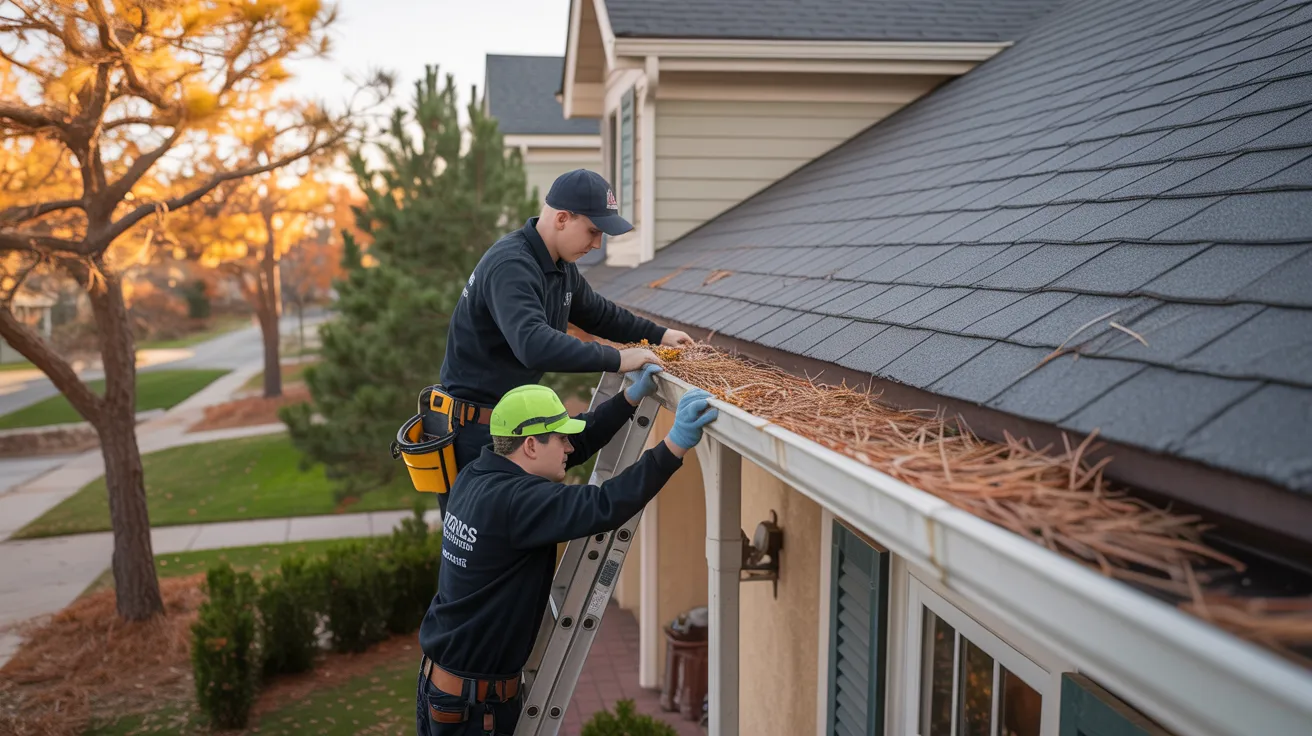
Though freeze-thaw deterioration is often held responsible, pine needles and roof debris produce the obstruction situations learn more that make Colorado Springs gutters deteriorate even faster. On sloped roofs, wind pushes needles, grit, and shingle granules into troughs and downspouts, where pine needle accumulation generates a dense mat that holds moisture and reduces discharge.
When water circulation reduces, debris compaction raises load, traps sediment against metal, and quickens corrosion at seams, fasteners, and end caps. You also get stagnant water that discolors fascia, pools under shingles, and overflows near foundations. Packed debris channels flow over gutter edges during storms, which destabilizes hangers and distorts pitch. Routine cleaning is critical here because needles don't wash out simply; they mesh, resist flushing, and keep your system wet for longer periods after every precipitation event.
When Gutter Cleaning Avoids High-Cost Damage
When you service your gutters on schedule, you lower stagnant water that can penetrate under shingles and produce roof leaks. You also manage runoff, which works to protect your foundation from soil loss, soil expansion, and basement moisture. Just as critical, you clear the damp debris that invites insects, rodents, and other pests before they can take up residence.
Preventing Roof Leakage
Clogged gutters can quietly change a minor drainage concern into a roof leak by capturing water along the eaves and forcing it beneath shingles, flashing, and drip edge components.
Scheduled gutter cleaning enables you to preserve an unobstructed drainage path, so water flows from the roofline instead of pooling near edges and valleys, and that reduces the likelihood of moisture intrusion, wood rot, and insulation damage inside your attic.
It also supports proper attic ventilation by reducing damp conditions that can compromise airflow and encourage condensation, and in Colorado Springs, snowmelt and windblown debris make seasonal service exceptionally important.
If you preserve gutters clear and correctly pitched, you preserve roofing materials, prolong system life, and decrease the likelihood of pricey leak repairs later.
Protecting Against Foundation Damage
Water that doesn't leave your gutter system properly can do far more than threaten the roof—it can also damage your foundation. When gutters get obstructed, overflow gathers along the 边界 of your home instead of flowing safely through downspouts and away from the structure. That ongoing saturation deteriorates bearing soils, hastens soil erosion, and increases hydrostatic pressure against foundation walls.
By ensuring gutters clean and appropriately pitched, you establish control over roof runoff before it accumulates near footings. Proper discharge preserves grading, limits settlement, and lowers the risk of cracks in slabs, crawl spaces, and basement walls. This also minimizes the probability of basement seepage, especially during Colorado Springs storms or spring snowmelt. Consistent gutter upkeep serves as a simple preventive approach that safeguards structural stability and allows you sidestep costly foundation repairs over time.
Eliminating Pest Infestations
When neglected gutters retain plant material and accumulated moisture, they transform into perfect breeding and nesting areas for pests that damage outdoor components and inside environments. When plugged troughs run over behind fascia and soffits, you increase the risk of pest nesting, wasp nesting, and unseen moisture migration.
Routine gutter cleaning removes decaying leaf matter, seed buildup, and moist sediment that entice ants, mosquitoes, birds, and rodents. Reestablishing adequate drainage decreases humidity near eave areas and removes openings formed by sinking sections, disconnected joints, and decayed wood. That is significant because degraded trim and open gaps allow rodent entry into attics, cavity walls, and insulation systems. Consistent maintenance interrupts pest activity early, preserves enclosure integrity, and enables you to avoid structural repairs, contamination cleanup, and ongoing extermination costs over time.
How to Identify You Need Gutter Repair in Colorado Springs
Even though gutter channels typically fail progressively, homeowners can spot the early signs before they result in expensive damage to your Colorado Springs residence. Check for sagging areas, disconnected joints, and brackets separating from the fascia. These warnings demonstrate the system can no longer transport runoff with adequate alignment or support.
Property owners should also check for corrosion stains, cracking paint, and fine cracks along channels and seams. After a storm, inspect for water pooling near your foundation or overflow pouring over the gutter edge. Inside your home, look for wet soffits, stained siding, or fungus near rooflines. In Colorado Springs, freeze-thaw cycles and wind can accelerate these symptoms. If you notice repeated overflow, visible deformation, or localized corrosion, your gutters likely need professional evaluation before minor defects become significant deterioration elsewhere.
Which Defects Does Gutter Repair Fix?
Quick intervention to gutter issues can resolve many performance defects before they migrate to the fascia, roofing structure, or foundation. Correcting leaks at end caps, seams, and outlet connections prevents runoff from saturating soffits and trim or siding. Appropriate resealing and fastening eliminate sections from separating under wind stress or snow load.
You can fix sagging runs that disturb pitch and cause water pooling near hangers or corners. Detached hangers can be refastened, troughs realigned, and localized blockages cleared so water drains to downspouts as intended. Fixing separated downspouts, minor corrosion, and bent sections eliminates water from spilling beside the home. Installing or adjusting leaf guards can restore flow and minimize recurrent clogging if debris intrusion is resulting to overflow. Timely intervention helps shield basement walls, walkways, and soil grade from moisture damage.
When Complete Gutter Replacement Is the Superior Option
Full gutter replacement typically offers a more consistent result than repeated repairs when damage spans multiple sections or the system fails to maintain proper pitch. That threshold is often reached when seams persistently separating, corrosion grows, fasteners come loose from fascia, or persistent leaks remain after sealing. At that stage, repairs constitute cumulative costs without returning full hydraulic performance.
You should also evaluate replacement timing if your gutters are undersized for existing roof runoff or if prior repairs resulted in inconsistent slopes. Full replacement allows you to correct alignment, hanger spacing, outlet placement, and drainage capacity in a single undertaking. It also offers the ability for material upgrades that improve corrosion resistance, joint integrity, and service life. When your existing system exhibits comprehensive failure, replacement better protects your roofline, siding, foundation, and ongoing maintenance budget.
Ideal Gutter Systems for Colorado Springs Properties
The next step after establishing that replacement is preferable than constant repair is identifying a gutter system that handles Colorado Springs conditions. Gutter materials and styles must withstand snow loads, quick freeze-thaw cycles, hail, and strong UV exposure without bending or degrading.
Most houses are suited to aluminum gutters as the preferred choice. Lightweight structure, rust-proof performance, and seamless configurations that reduce leak points make them practical. A heavier gauge operates better against hail impact and seasonal movement. If your residence has a historical or architectural style, half round gutters can be a strong fit. Water flow is enhanced and debris buildup is slowed by their smooth interior, but accurate bracket spacing and slope control are needed. During severe summer thunderstorms and spring snowmelt events, larger downspouts and adequately sized troughs boost drainage capacity in steeper roof areas.
Colorado Springs Gutter Expenses and Contractor Selection Tips
Gutter expenses in Colorado Springs fluctuate with material, gauge, profile, roofline design complexity, linear footage, downspout quantity, and seamless fabrication options, so compare bids carefully. Request each professional to supply identical specifications, fastener spacing, outlet sizing, and warranty coverage terms so you can compare actual scope instead of price only.
You should verify licensing, insurance, and local references before signing. Request a written estimate that itemizes removal, disposal, fascia repairs, gutter guards, and labor rates. That detail supports Seasonal budgeting and avoids surprise change orders. Watch out for unusually low bids; they often leave out drip edge corrections or proper hanger spacing. DIY mistakes include incorrect slope, undersized downspouts, and weak fastener selection, all of which can lead to overflow or ice damage. A competent installer should clarify code considerations, water management, and ongoing maintenance.
Frequent Questions and Answers
How Often Should You Examine Gutters in Colorado Springs?
A minimum of two times per year, preferably in spring and fall, you should assess gutters to identify accumulated debris, joint issues, and water flow problems early. Colorado Springs seasonal checks are particularly important since snow, hail, wind, and pine needles hasten deterioration. You should also carry out post-storm inspections after heavy rain, hail, or severe winds. Properties with numerous trees or steep rooflines usually benefit from more frequent checks.
Can Gutter Guards Deal With Pine Needles and Roof Grit?
Yes—and coincidentally, effectiveness depends almost wholly on guard design. You'll find micro mesh guards process pine needles and roof grit best because their dense screening stops fine debris while permitting water through. Needles are successfully deflected by reverse curve systems, but roof grit frequently slips into the gutter. No guard is truly zero-maintenance; you should still check periodically to confirm flow, stop buildup, and identify wear before drainage suffers.
Are Seamless Gutters Valuable It for Aging Colorado Springs Homes?
Aging Colorado Springs homes benefit from seamless gutter upgrades. Less junction counts mean reduced potential leaks and enhanced flow management during snowmelt and intense hail events. Appropriately sized steel or aluminum setups safeguard fascia boards, foundation structures, and outdoor features, helping to protect property worth. If your residence has heritage considerations, you can select profile shapes and finishes carefully, maintaining traditional character while upgrading effectiveness. Expert installation ensures precise slope and reliable mounting.
Will Your Homeowner's Policy Pay for Hail-Related Gutter Damage?
Hail hits like a drumbeat on metal, and it may engage your homeowner's coverage for gutter damage when the policy classifies hail as a covered peril. You must check hail coverage, your deductible, and whether aging, corrosion, poor maintenance, or previous issues are listed under policy exclusions. Photograph the harm immediately with pictures and assessment notes. When adjusters confirm storm-related impact, you can generally receive repair or replacement fees, subject to policy limits.
What's the Duration for a Average Gutter Installation?
A typical gutter installation will take you about one day on an standard home, usually 4 to 8 hours. Your project duration copyrights on roof line intricacy, linear footage, downspout count, condition of fascia, and atmospheric conditions. You'll see faster completion when crew coordination is solid and materials are delivered pre-cut. If your house needs fascia repairs or custom fabrication, you should anticipate the project to run into a second day in some situations.
Conclusion
If you remain proactive, you'll protect your Colorado Springs house from roof edge rot, foundation water, and drainage issues. Clear gutters on a regular basis, address leaks and loose sections early, and change out aging systems before they become the thing that breaks the camel's back. With the correct material, proper sizing, and expert installation, your gutters will manage snowmelt, debris, and heavy storms more reliably. A qualified local contractor assists you make cost-effective decisions that last for years.